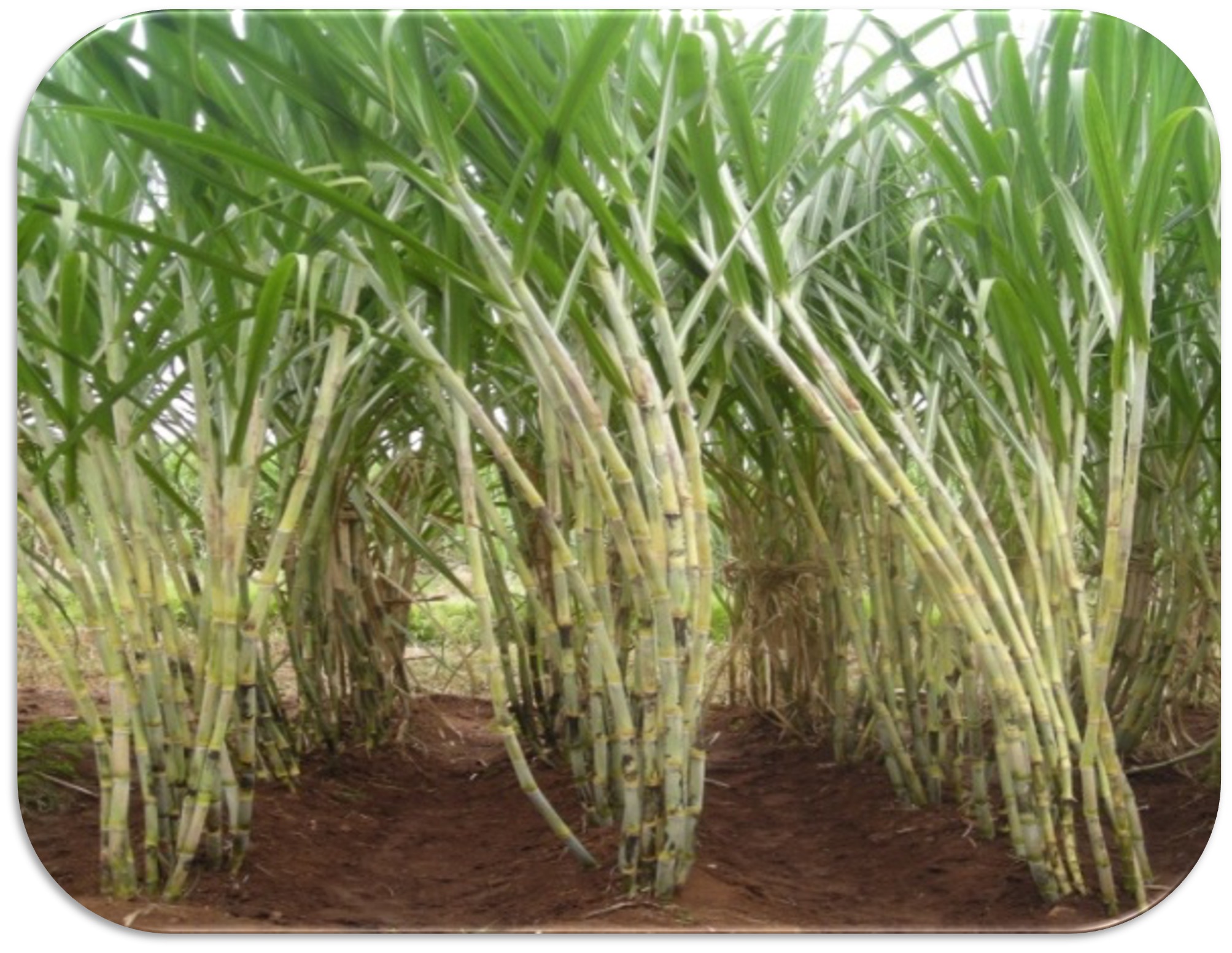
AICRP on Sugarcane
Year of Establishment: 1972
About the Scheme
Zonal Agricultural Research Station, Mandya (ZARSM) under the canopy of University of
Agricultural Sciences, Bengaluru (UASB, Karnataka) and it is located at about 11km from Bangalore-Mysore
highway, en route to Melukote. Centre is constantly striving towards the excellence in research
and extension in the field of agriculture. The station is showing persistent efforts in research and
development and has evolved many high yielding and disease resistant varieties in sugarcane, rice,
maize, small millets and forage crops.
Since its inception in 1931, the centre has been the hub of sugarcane research in the University and
has shown keen interest in educating and creating awareness among the farmers through field
demonstrations and extension activities. The All India Coordinated Research Project on sugarcane
was established at ZARS, V. C. Farm, Mandya in the year 1972.
Since from its establishment, it has been playing a pivotal role in the development of improved
varieties, agronomic management practices and plant protection measures for the zone.
Geographically the centre is placed between 12°45’ to 13°57 North latitude and 76°45’ to 78°24’
East longitude and it is at an altitude of 695 m above MSL.
The centre received 986 mm mean annual rainfall in 54 rainy days and is unevenly distributed.
Hence, crop was fully raised under external irrigation from Krishna Raja Sagar Dam.
April was the hottest month with mean maximum temperature of 33.5°C while, January is a
coldest month with mean minimum temperature of 19.7°C.
Both, mean maximum and minimum temperature are within the range of sugarcane cardinal
temperature range and hence, sugarcane is a major crop in this area and mainly planted in
June-November and also in January – February. The best time to visit centre is during
September-October.
Breeding Programme
- To isolate elite entries under IVT for better adaptability, higher cane and sugar yield.
- To isolate elite entries under AVT-I PC for better adaptability, higher cane and sugar yield.
- To isolate elite entries under AVT-II PC for better adaptability, higher cane and sugar yield.
- To isolate elite entries under AVT-Ratoon for better adaptability, higher cane and sugar yield.
- To evaluate elite clones from III clonal stage of fluff for cane yield and quality.
- To isolate elite clones from different years of fluff.
- To evolve sugarcane varieties suitable for local condition by Hybridization programme.
- Hybridization programme effected at SBI Coimbatore and Agali by AICRP Sugarcane Breeders/Staff.
Facilities and Conservation of Germplasm
- 120 Sugarcane Germplasm maintained at ZARS, V.C. Farm, Mandya.
Crop Production Technologies
- Farmers adapted June-July planting due to availability of canal water followed by October-November and January-February planting in Cauvery Command Area.
- Pre-emergent application of Metribuzin (70%) @ 1.0 kg a.i. ha-1 or atrazine (50%) @ 1.9 kg a.i. ha-1 or combination of atrazine + 2,4-D and trash mulching found effective in control of weeds.
- Point placement of urea super granules @ 250 kg/ha found enhance N use efficiency.
- Combined application of organic manures and inorganic fertilizers found to enhance sustainability.
- French bean, soybean cv monetta, KB-79 found to be best for intercrops in sugarcane.
- Application of Azatobacter @ 2.0 kg ha-1 found to increase the cane yield.
- Trash mulching @ 6 t/ha found effective in mitigating drought effects.
- Sugarcane was found to respond to applied potassium only upto 150 kg/ha.
- Integrated use of pressmud cake @ 4 t ha-1, Azatobacter @ 5 kg ha-1 with recommended (250 kg N ha-1) found ecologically viable.
- Application of ethrel @ 750 PPM found to control flowering in sugarcane.
- 75% nutrients through inorganic and 25% through organic source were ideal to achieve higher cane yield and sucrose percentage.
- Metribuzine at 0.6 kg a.i./ha as pre-emergent spray followed by 2,4-D 1.0 kg a.i./ha at 45 DARI was effective in controlling weeds and realizing higher cane yield in ratoon crop.
- 6 feet wide row planting in sugarcane given on par yield as that of conventional 3 feet planting. It also facilitates mechanization of all IC operations with power tiller/tractor mounted implements.
- Sub-surface drip fertigation in sugarcane found to enhance sugarcane yield up to 45-50% with 50% saving in irrigation water.
Water Saving Technologies
Nil
Soil Health Management and Nutrition
As per the package of practice
Technologies on IPM
- Among the new insecticide molecules granular application of Chlorantraniliprole 0.4G @ 22.5Kg/ha and Fipronil 0.3G @ 25.0 Kg/ha at the time of planting and 60 days after planting found effective in the management of ESB.
- Wooly Aphid resistant variety CoVC 2003-165 was released for Cauvery Command Area.
- Application of systemic chemicals Imidacloprid 100 gm a.i./ha or Thiomethoxam 50 a.i./ha found effective in control of wooly aphids.
Ruling Varieties/Hybrids
Contact
Name & Designation
Dr. N. Shivakumar
Director of Education
Professor & I/c Breeder and Scheme Head